

Tom Kranz
Joined April 2026

Tom Kranz is a writer and podcaster. He is a native of Philadelphia, where he attended Temple University and earned a bachelor’s degree in communications. His career as a journalist took him to radio, television, and online platforms, followed by twelve years as a corporate communications director. He also served as a volunteer EMT for 22 years in his New Jersey town.
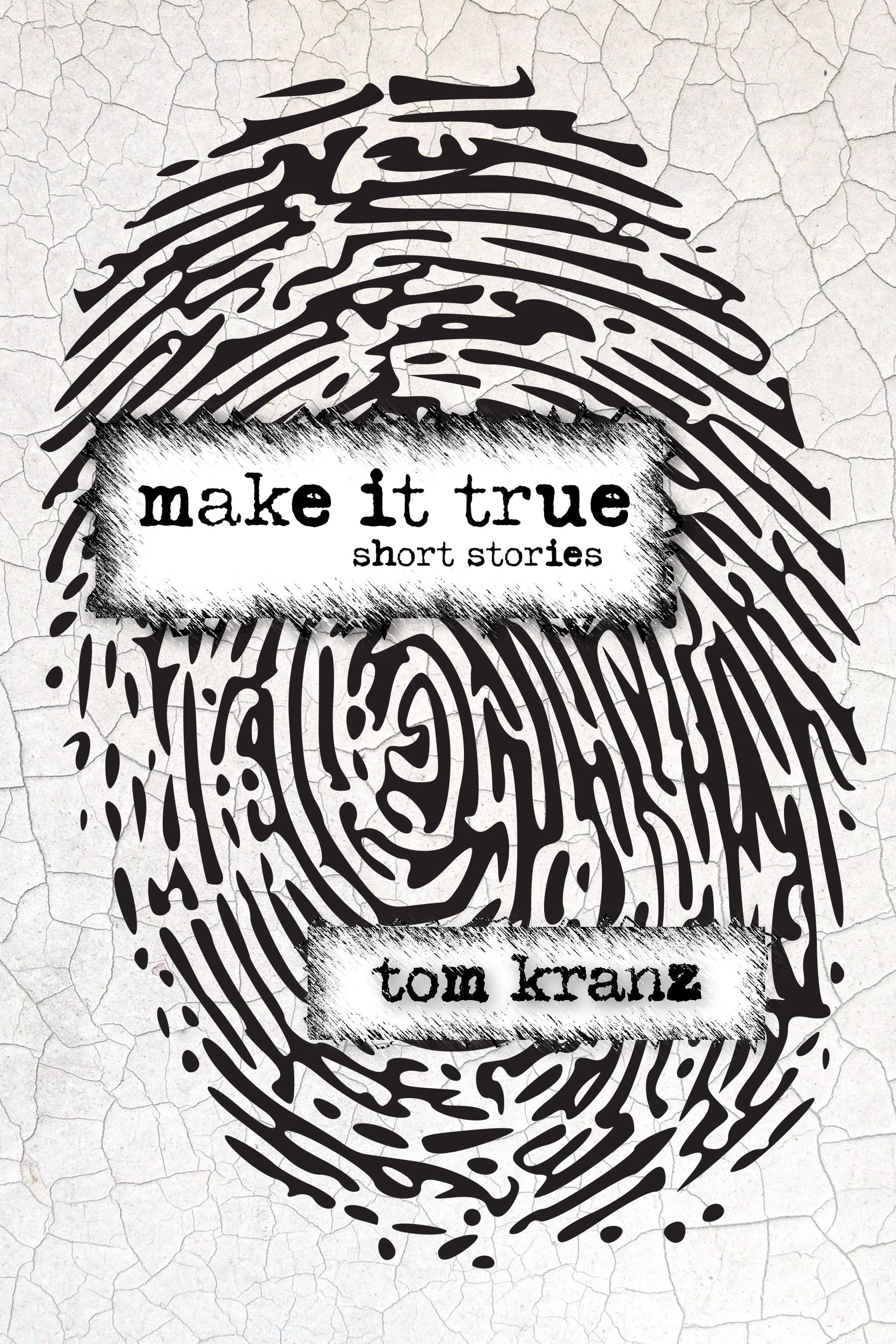
Books by Tom Kranz
Dear Friends,
Thanks for your interest in my books and podcast. I've loved writing since high school, where Mr. Corasick encouraged us to seek "universal truth" in our writing, and Mr. Barsky urged us to write from our personal experiences. Both exhortations have stayed with me over the years. I strive to do both in everything I write, though I'm not always successful.
If you like any of my stories, try another and another and feel free to tell 5,000 of your friends.
— Tom Kranz
Links
Newsletter signup
Fan Mail
Writers, beware! Protect your work.
Blog PostAdded August 29, 2026
The number of publishing scams I’ve been hit with over the last six months is staggering. Fortunately, I am suspicious of anything I get from anyone whose sender name or company I don’t recognize, whether it’s email, texts, or social media DMs. This goes back to my days in corporate communications, where, to my company’s credit, our IT guys were so paranoid about hackers that you couldn’t receive any emails from Gmail, Yahoo, or other free vendors. We were STRONGLY encouraged to create a whitelist of email senders and not to use our company cellphones to communicate with anyone outside the company.
As writers, we know bad actors who seek to impersonate publishers, agents, other writers, curators, editors, discussion leaders, and book clubs. They want to steal manuscripts. They want to steal our money. They want to steal our identities. I’ve been approached via email and text by several of these scuzzballs this year alone. They don’t even write their bullshit themselves. Their invitations and platitudes have that generic, too-perfect, AI feel, and they are relentless.
We think we’re all smart and savvy about thievery, but the bad guys are getting better every day. This weekend, I received an email in my Gmail inbox (my first clue) from someone claiming to be a VP at Simon & Schuster. She absolutely LOVED my latest short story collection, heaping on praise for my insight and wonderful prose. The email signature included the person’s headshot, email address, company website, and Manhattan-based address. But no phone number (another clue). They even sent a link with a company page showing the woman’s headshot and title to “prove” she was real. Hm.
They left clues to their fakeness, which I later confirmed with Simon & Schuster’s fraud team, whose email address is listed on the real Simon & Schuster website. They have a whole page on fraud, having been victimized many times by entities claiming to be from S&S. I reported the emails I received and they replied immediately, asking for copies of the email header and HTML code to try to track down the assholes. It turns out the woman they claimed to be is a real VP whose identity was lifted straight from their website. That fraud page confirmed that Simon & Schuster doesn’t send unsolicited requests for manuscripts, nor does it accept them from non-agented writers. It also plainly showed their email format and cautioned against engaging with anything less.
One of the most telling clues to fakeness is the sender email address. This fraudster took the VP’s real email address and created a Gmail version. Any inquiry like this with @gmail.com as a suffix is probably fake. I’ve seen it over and over again. Or the email suffix is unrecognizable, perhaps from a vendor or private server in the Philippines or India. Memorize this mantra: WHEN IN DOUBT, DON’T OPEN, DON’T CLICK, DON’T REPLY.
My other personal tips for keeping your work safe:
Be very circumspect about whom you send samples or full manuscripts to. This includes prospective agents, hybrid publishers, editors, reviewers, and review clubs. Research who’s getting your work before you hit SEND, and ask for assurance that they won’t share it beyond their specific purpose. There’s always a risk, but you reduce it by being as vigilant as possible.
Register your copyright. Under the law, your work is copyrighted the moment you publish it either online or in print, and you can affix that little © and the year. However, in the event you might actually have to prove it in court, a copyright registration certificate is the way to go. Register your copyright through the U.S. Copyright Office website for $65. Only go through the official website! A bunch of third-party sites will charge you more just because they can. The process is straightforward. Once complete, you’ll receive a certificate in the mail in a month or two. Yeah, it’s a hard copy through snail mail, but then you have it in writing.
Look for evidence. A new favorite approach is to offer you the spotlight in a book club’s discussion group. After extolling your work with too much praise for your modest or better-than-modest book, they will invite you to be a featured author at their next discussion group. For a mere $200, they will make up a spanky one-page flyer, promote you among their members and feature you during one of their coffee shop meetings in downtown Copenhagen. See if you can find any evidence of this book club online, or on Reddit. In fact, look for evidence of ANYONE who approaches you under the auspices of a company or club.
After becoming famous, J.D. Salinger sat in a shack on his New Hampshire property and wrote pages and pages that he never intended others to read. He said so in his last interview in 1974. You can be like J.D. and write for yourself and find, as he did, “a marvelous peace in not publishing.” However, if you have visions of becoming a rich and famous author, or even a not-so-famous-but-decent-author for your loyal fans, you’ll be publishing somewhere, somehow.
Be careful!


